Thursday, September 18, 2025

Escape, Engagement, and Eucatastrophe


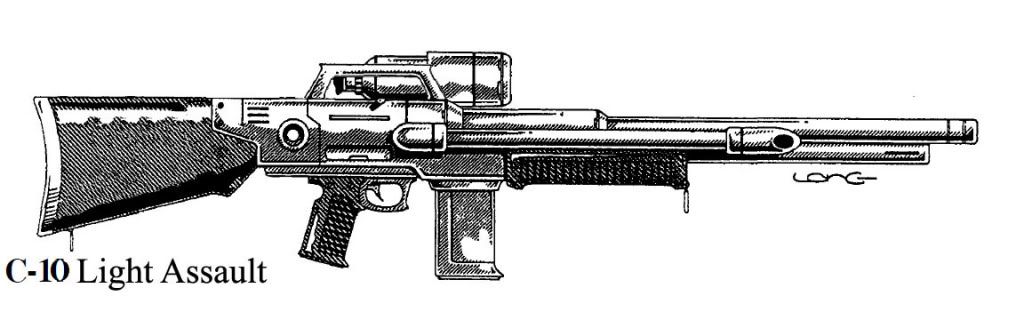
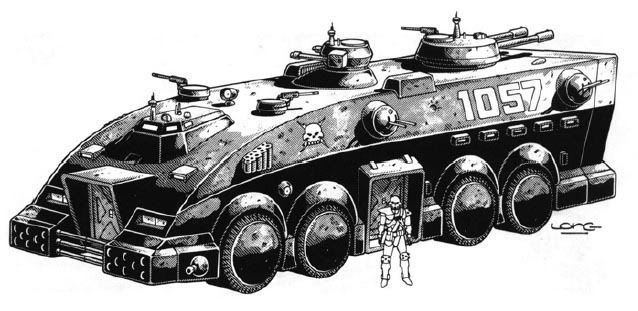
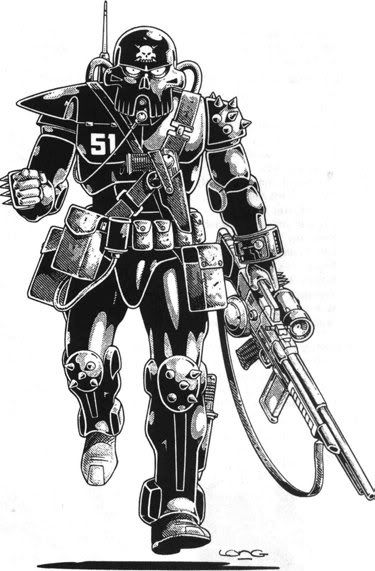
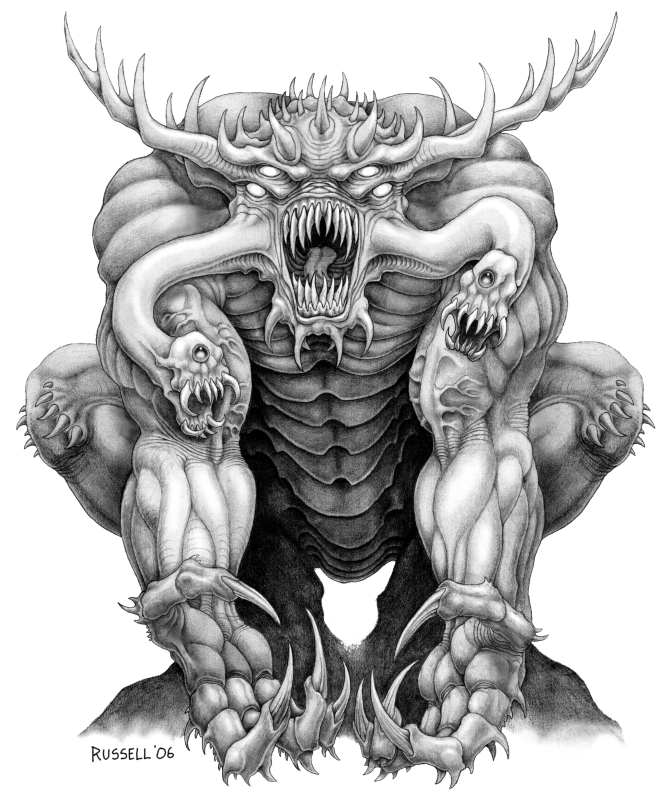
Artwork from GRIDSHOCK 20XX by Grey Wizard

A sentiment that I've been seeing often lately is wanting to avoid games that take place in post-apocalyptic or cyberpunk settings because they're "too close to home" right now. I can certainly understand finding it hard to enjoy something, or wanting to avoid something that puts you in a bad headspace, even if I can't really relate in this case.

One thing I've realized recently is that I just don't think about gaming as deeply as some do. Maybe I should! I get that different people have different means of "escape" in this regard, but I resist the idea of allowing something - or someone - else to take my fun away like that. 

I'll admit to occasionally wondering if some players are overthinking their hobby, but I think that's unfair, and likewise oversimplifying it. At the end of the day, people need to take care of themselves, particularly right now. If someone needs to have a more purely escapist experience in a different kind of imaginary world in order to fully enjoy themselves, that's valid. Speaking only for myself, plumbing the depths of misery or brutality isn't something I seek out in a game, but I can enjoy engaging with a game that includes some dystopian elements, particularly if I'm playing characters who want to change that fictional world for the better.

(The fact that the post-apocalyptic world I created is pretty over-the-top probably makes things easier for me. I might have a harder time escaping into something grimmer and grittier.)

Postscript: 
Someone on VX2's Discord suggested that they play in dystopian worlds as a means of catharsis rather than escape, which I found to be a valuable distinction. I think I tend to engage with RPGs as a form of release (and socialization) as much or more so than I do as an escape, which I perhaps arrogantly think helps me enjoy them more freely and thoroughly than I might otherwise. Who's overthinking now?

Saturday, August 31, 2024

Terminal State

Now the lines are converging to the point of no return.

VX2, the publishing imprint my brother Chris and I operate, has launched our second Kickstarter campaign: Terminal State.

Terminal State is a cyberpunk roleplaying game that uses Free League Publishing's Year Zero Engine, popularized by games like Mutant: Year Zero, Forbidden Lands, and Tales From the Loop, as well as licensed RPGs like Blade Runner, Alien, and The Walking Dead. With detailed rules for hacking, cybernetic and biomorphic augments, and highly customizable weapons, vehicles, and drones, it adds a lot of new parts to the YZE rules engine. It also presents its own setting: a unique, vivid, and violent vision of cyberpunk.

Terminal State aims to put a more modern spin on the cyberpunk genre, one rooted in the present rather than the 1980s. Its characters are permanently online, connected to and surrounded by augmented reality. New forms of humankind live among their creators -- and suffer alongside them. Hyper-corporations supersede states and governments, and seek to surveil and control all aspects of life. Unless you stop them. 

"Maybe you'll change the fate of humanity. Or maybe you'll just blow shit up."

If you're intrigued, please check out the Kickstarter campaign. There's even a free QuickStart you can download to test drive it, if you like (also linked on the Kickstarter). 

Thanks.

(VX2's previous Kickstarter campaign was GRIDSHOCK 20XX, which I created and wrote. This time, Chris is in the creator's chair; I'm pretty much just an editor and advisor. The writing, rules, and graphic design are all Chris. He's been writing, playtesting, and refining Terminal State for years. I honestly think it's an impressive work, and I would love to see the campaign succeed.)

Friday, July 5, 2024

Revisiting GRIDSHOCK 20XX Zine 4: Reference

Gray would be the color.

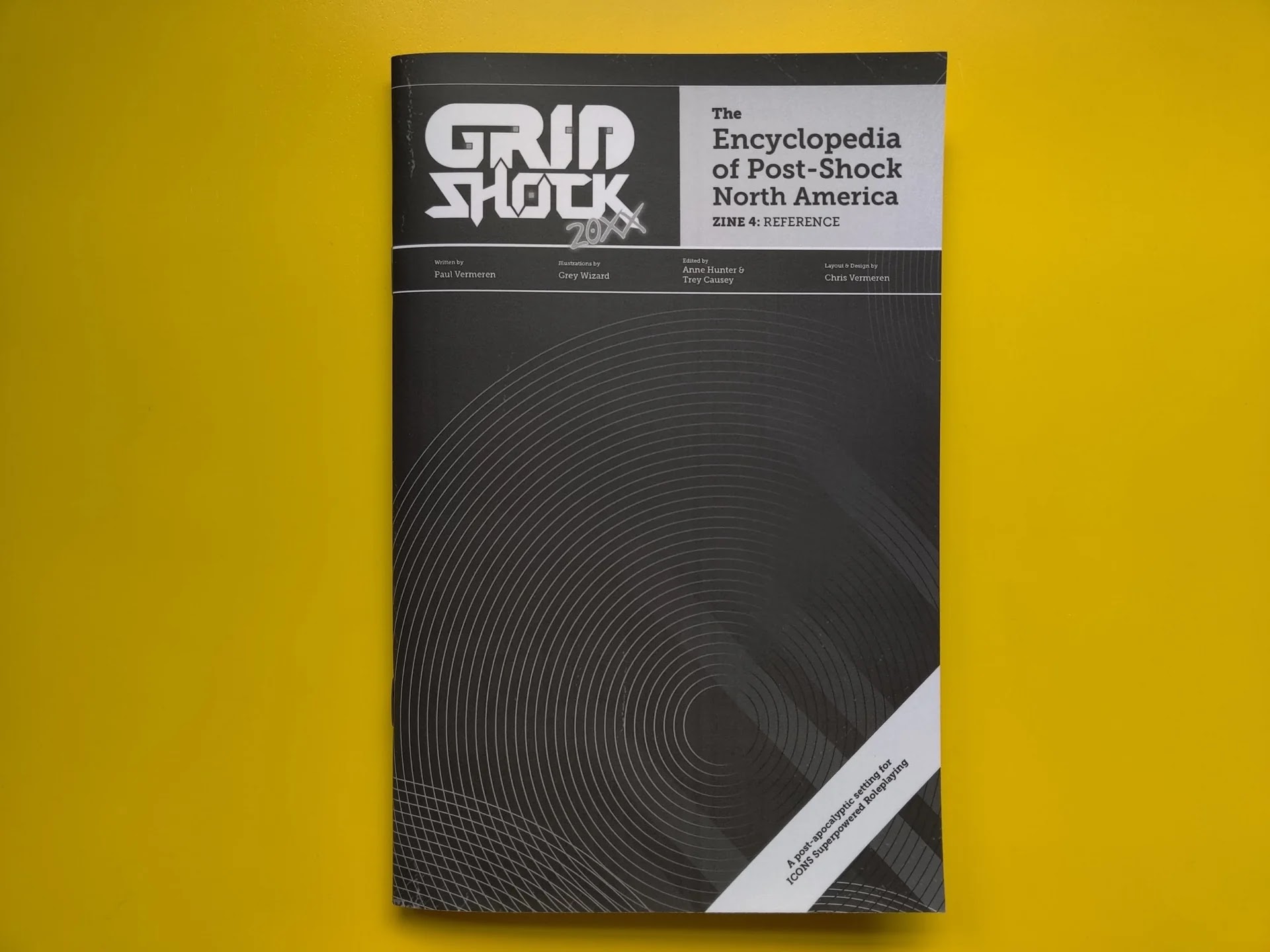
GRIDSHOCK 20XX's fourth and final zine is "The Encyclopedia of Post-Shock North America" (or Reference for short). The back cover calls it "A glossary of everything you've wanted to know about the GRIDSHOCK universe - and then some - from A to Z" that includes "data about the world after the Shock and everything in it, cross-referenced with every other GRIDSHOCK 20XX zine." It's essentially an official guide to the setting, presented encyclopedically.

The Cover

  • In keeping with the academic tone of the EnSHOCKlopedia (as I called it during development), I opted for a simple graphic cover that I hoped would evoke old science textbooks and the like. I think it works, and sets itself apart from the other zines. The idea was to communicate that Reference was somewhat less "core" than the other three zines -- strictly for those obsessive folks who enjoy digging far below the surface of a game setting. You know, people who can spend hours reading The Official Handbook of the Marvel Universe, or The Princeton Field Guide to Dinosaurs, or Wikipedia. The sickos, in other words.

The Contents

  • The Reference zine itself is an encyclopedia. It's entirely made up of alphabetically organized entries describing the various elements that make up the the game's setting (or canon, or "lore," if you insist). Many are illustrated with sketches that Grey Wizard -- the co-creator of Break!!, which was recently released in print to great fanfare -- drew early in GRIDSHOCK's development. Back then, it was basically a bunch of scattered ideas I was blathering about on the now-defunct Google+.
  • The alphabetical entries are written in an omniscient point of view. Their tone is fairly academic and perhaps a bit dry. If you've ever read the old Official Handbook of the Marvel Universe from the 1980s, you will understand what I was going for. Whether writing in that style was a good idea is an open question. Whenever a term that has its own entry in the zine is mentioned, it's written in bold face, so readers can look those up and get a more complete picture. 
  • The idea is that you would naturally start to learn more about the world and history of GRIDSHOCK as you cross-reference those terms. I learned a lot of things this way as a kid, and still do today, but I'm a professional academic librarian. I will admit that this approach could be intimidating to some readers, particularly when you run into ten or more bolded terms in a single entry.
  • Also, I am well aware that this kind of information-dense background is out of vogue in some circles of the hobby these days. "Anti-canon" is a buzzword that has gotten some traction recently. I feel like avoiding a huge info dump is usually a noble goal, particularly if one is playing with a genre that is well-established (like dungeon fantasy, for example). The thing is, GRIDSHOCK is a less familiar concept that takes a bit more explanation than that. Plus, some readers really enjoy "lore" and figuring out how it all fits together, as the success of publications like Vermis make clear. (Not to say that this zine is very much like Vermis in presentation.)
  • My intention was to make it so that the Reference zine wasn't something that players or even GMs needed to be familiar with to enjoy GRIDSHOCK, but I wonder if having an entire zine dedicated to "deep setting lore" might act as a barrier, or something that scares off people who might otherwise enjoy it. It's a question I will definitely need to figure out as I work on GRIDSHOCK's next iteration.
This post-mortem examination of GRIDSHOCK 20XX took longer than I expected to finish, but I did move to a new state and start a new job in the middle of doing it. Thanks for reading.

Thursday, June 6, 2024

Revisiting GRIDSHOCK 20XX Zine 3: Regions

My baby blue.

Somewhat delayed, here's the post-mortem for GRIDSHOCK 20XX Zine 3: Regions, which gives GMs "all the details on a world in the grip of super-villainy." Well, maybe not all the details, but a good deal of them, anyway.

The Cover
  • Each region in GRIDSHOCK 20XX has its own unique "big bad" in charge of it. For the cover, I asked Steven De Waele for an image of Lord Thunder, the daemon-possessed former hero and head honcho of The Sanction, with his right-hand man Atramentus at his side. I think Steven understood the assignment. Lord Thunder looks like a nasty customer. In retrospect, Atramentus' visual design is too similar to the Omegas, an entirely different type of adversary, so I would give different guidance to the artist if I were to do it over. He still looks sinister and cool, though. I'm not going to lose sleep over it.
  • You may have noticed that this zine is in landscape format, so pages turn vertically. I've heard a little bit of grumbling about that, but I think it worked well, particularly because it gave Steven room to provide a panoramic view of each region. We set up the PDF version to display those landscape format pages properly. I honestly don't regret that design decision.
Region Entries
  • Descriptions of each of the eight regions of the GRIDSHOCK setting take up the entire zine; even the inside covers are used to convey setting information (except for the inside back cover, which the ICONS license required to be OGL information).
  • I think the regions themselves are pretty cool. Each one is designed to present a distinct flavor of dystopia, each with its own issues, locales, and badguys for player characters to deal with (or have as part of their origin). The presentation of each region includes important NPCs, locations, etcetera in a standardized format with numbered lists. The intent was to provide enough information for GMs and players to have an idea of what the regions were about without bogging them down with tons of text. I think it worked, though my predilection for circuitous sentence structure is on display. I see a lot that should be tightened up, trimmed down, or made clearer.
  • A few adversaries got full stat blocks. These are presented in the typical format for ICONS, which means that the GM would almost certainly need to look up what all their powers do. Ideally, I'd want the character writeups to be more immediately usable.
  • Really, the map that was in Zine 1: Roadmap should probably have been included here instead.
  • This is probably my favorite of the four GRIDSHOCK 20XX zines.
Fear not: The next blog post will wrap up this retrospective on GRIDSHOCK 20XX. It might be a little while before you see it, as I'm moving house and starting a new job this month. Thanks for your patience.

Wednesday, May 15, 2024

Revisiting GRIDSHOCK 20XX Zine 2: Roster


Pink noise, delicious.
My "autopsy" of the GRIDSHOCK 20XX zines I published a couple of years ago continues. This time I'll be looking at Zine 2: Roster, which "supplements hero creation with new templates and adversaries custom-built for dystopian world of toyetic assicking." You know, that still sounds pretty good to me.

I wanna get into it, man:

The Cover

  • Steven De Waele turned in an illustration that I think does a good job of showing off the unusual types of characters players can create and play in GRIDSHOCK. The idea for the scene was a diverse group of Vector heroes watching as a psychic Free Agent telekinetically lifts a truck motor aloft. A truxorcist performs a mystical ritual, perhaps protecting it from daemonic possession. What's important is that I think the illustration is interesting to look at on its own. I think it gets across that trucking is important in the game, and that there are lots of interesting character options.

Power Sources and Vector Templates

  • I spent a page discussing where the different Vector (player character) types get their powers from, and why that's important. This may be a little over-exacting, but my hope was that it would help give players an idea of how their character fits into the world. There are a lot of things like that in the zines; whether they accomplish that goal is a good question. Some probably help, others might just make things more complicated than necessary.
  • The bulk of the rest of Zine 2 consists of the twelve customizable Vector templates that GRIDSHOCK players use to create characters. Each has a two-page spread with an illustration taking up nearly half of it, and each has its own unique layout style. Steven did a great job with the art for each one -- he pulled off an impressive blend of American, European, and Japanese art styles that works really well for the subject matter, and each character has a lot of personality. I'm also glad that I gave Chris the chance to play around with layout and typefaces here. I might have him dial it down a little next time, since a couple of them are less clear as a result. (I think Chris agrees with this assessment.) Giving each template's name its own "logo" is fitting, I think, and I'd probably keep that.
  • Although it might look intimidating to newcomers, I think giving three examples of how each template can be customized is a good idea, considering how much impact power selection has on creating characters. I think it's also useful for players who might be looking to play a specific type of character and don't want to do it from scratch.
  • Next time, I might cut two or four templates from the initial range of options. Eight or ten would still be enough to choose from, I think -- again, choice of powers can completely change how a character plays and that provides a lot of customization.

Threats and Menaces

  • This tries to boil two of the GRIDSHOCK setting's major adversaries -- daemons and Exhumans -- down to a couple of pages. It works, technically speaking, but it's a stopgap measure. It would be much better to provide at least as much detail on each of them as the Vector templates got, but space didn't allow for it. Ideally, each one would have had more flavor text, as well as suggestions on how the GM should use the powers I listed for them. Something to correct next time.
Next time, I'll dissect Zine 3: Regions, maybe the most ambitious one of the four.

Monday, May 6, 2024

Revisiting GRIDSHOCK 20XX Zine 1: Roadmap


It was all yellow.
I Kickstarted and published GRIDSHOCK 20XX as a set of four zines, each presenting a few chapters that, at least in theory, added up to "a post-apocalyptic setting for use with ICONS Superpowered Roleplaying." Zine 1: Roadmap provides "a crash course on the world of GRIDSHOCK 20XX and its history," and includes optional and variant rules for use with ICONS.

Since I worked on the world of GRIDSHOCK for years before I finally released it in this form, there's a lot for me to unpack. The temptation to blather on and on about my creation is strong, but I think the best way to resist that urge is to just tackle the zines section by section, as presented. (I will try not to be too hard on myself, but I also think it's important to point out when things don't work -- or do.)

The Cover 

  • This depicts a motorig (basically a super-semi truck) smashing through a gate while fascist Supremacy goons blast at it. I always like Steven De Waele's art, but I feel like it's a little tough to tell what's happening on the cover at a glance. I probably asked for too many elements to be included for the price point, so I blame the art director (me) rather than the artist here.
  • I still love the logo, but if I was to do it over, I would probably ask Chris to make it more horizontal, to make it clearer that it's "GRIDSHOCK" and not "GRID SHOCK" (which I have seen it listed as on several online retailers).
  • I think having "You can make it if you run" to kick off the back cover blurb is cool. Your mileage may vary.
  • Chris' map on the inside cover looks great -- if you got one from the first print run. The second run is too dark for reasons I have never been able to figure out, and that makes it hard to read, unfortunately.
Welcome to the Shock
  • I'm proud of this chapter. I think it summarizes what the world of GRIDSHOCK is like pretty well, and without over-explaining. It effectively lets players and GMs know how it's different from other settings and gives a quick rundown of how it got that way.
  • The "What Do Vectors Do?" section, which lays out exactly what the game is about, is solid. Next time, I will make it even clearer: GRIDSHOCK is about heroes driving around in big trucks, fighting stuff with superpowers, fixing problems, righting wrongs, and then getting the hell out of Dodge before the bastards in charge drop the hammer on them.
  • Though I see some things that could be improved, I stand by this section, and will probably keep big chunks of it more or less intact in the next iteration. I'll tone down the discussion of how GRIDSHOCK fits into the superhero genre, though, because so many of its assumptions are not part of what most people consider that genre to be, especially now.
Timeline of the GRIDSHOCK 20XX Universe
  • This chapter doesn't hold up as well, unfortunately. It's just too much information. I think I was hoping to impart a sense that this is a rich, complex tapestry of a setting, and I went with a writing style reminiscent of the analytical (and often downright dry) presentation you get in something like the Official Handbook of the Marvel Universe. I think that what it ends up doing is feeling restrictive instead.
  • If I was a GM coming to this setting cold, I'd be concerned that whatever cool stuff I thought could happen in GRIDSHOCK while reading the comparatively fun, evocative preceding chapter might not fit into this terminology-laden, intricate timeline. I think the history that is described in these few pages is cool, but it's so verbose and information-dense that it's overwhelming, maybe even boring at times. There are probably people who liked it, but in retrospect, it doesn't do what I wanted it to, which was to show off a rich setting.
  • Looks cool, though. Using public domain photography was a financial necessity, but when combined with the flowchart layout, it imparts a textbook feel that I think is unique in RPGs and consistent with what's being presented. And the artwork that Grey Wizard made to introduce the section is fantastic. It just happens that what follows isn't a very inspiring read. If I keep the timeline at all, it'll be completely revamped next time. I suspect it may not be needed at all.
Rules Changes for GRIDSHOCK 20XX
  • This chapter forces me to have a tough talk with myself. I think ICONS Superpowered Roleplaying is a great superhero game. It's my favorite. However, from the perspective of moving units and finding players, using it for GRIDSHOCK was probably unwise. The roleplaying game industry is one with a handful of big games that have long lifespans, and innumerable indie darlings which, while often deserving, don't attract long-term attention. ICONS made a splash when it debuted in 2010. By the time I published GRIDSHOCK, over ten years had passed, at which point it had a small but loyal fanbase, who largely use ICONS for its intended purpose: classic "animated series"-style superheroics, not genre-warping post-apocalyptic ass-kicking super-truckers.
  • To be blunt, GRIDSHOCK is really "high concept" and would still face an uphill battle regardless of what system it used, but it should have been a standalone game. Releasing it as a modular supplement instead -- even for a really damn good game like ICONS -- limited its reach.
  • All that having been said, I playtested all of the new rules presented in this chapter and they work well in ICONS. The alternate rules I wrote for things like specialties, qualities, and combat deliver the intended experience more effectively than the standard ones. Some of them are good enough that I have adapted them to an entirely different system, the Year Zero Engine, and after playtesting them again, found that they work well there, too.
  • Let me be absolutely clear that none of this is said with any disrespect for ICONS or its designer, Steve Kenson. Steve is one of the industry's best, and is undoubtedly the most important designer of superhero RPGs working today. He has never been anything but supportive of GRIDSHOCK 20XX, which I sincerely appreciate.
Next week, I'll dig into GRIDSHOCK 20XX Zine 2: Roster, which details the various types of characters you can play in GRIDSHOCK.

Monday, April 29, 2024

A Look Back at GRIDSHOCK 20XX


In 2021, I launched a Kickstarter for GRIDSHOCK 20XX. GRIDSHOCK was a setting concept I had been writing about on Google+ until that social media site was rendered defunct. You can skim the Kickstarter page for a more detailed idea of what it's about, but the ad copy I used to sum it up works as an elevator pitch:

In 1945, superheroes saved the world.
In 1986, it ended.
In 20XX, supervillains rule what's left.
Welcome to GRIDSHOCK 20XX.

Though I had been messing around with writing a new set of rules specifically for GRIDSHOCK more or less since I first thought it up, when Kickstarter's second Zine Quest promotion rolled around, I impulsively decided "screw it" and chose to publish the concept as a set of zines for ICONS Superpowered Roleplaying, a game I like a lot. 

Since it was a snap decision, I had to scramble to get the Kickstarter funded -- which it just barely did, with a bit over 100 backers. With the invaluable help of the project's other contributors, including Steven De Waele and Grey Wizard on art duties, Anne Hunter and Trey Causey editing, and my brother Chris Vermeren's layout and graphic design, I delivered the printed zines and PDFs in 2022 as promised. Not long after that, I inked a deal with indie RPG publishing juggernaut Exalted Funeral for a second print run of the zines.

None of that is meant to sound like bragging. On the contrary, while I'm quite proud of what my collaborators and I put together, I made a lot of mistakes -- both in terms of promotion and production, as well as in how I conceptualized and then presented this GRIDSHOCK thing. I'm planning to relaunch it as a standalone roleplaying game, so I've started re-reading the GRIDSHOCK 20XX zines for the first time since they were published. In the next few posts, I'll talk about what I think works in GRIDSHOCK, what doesn't, and what will change.

Monday, April 22, 2024

Dragonbane Kin: Underworld Otter

New illustration kindly provided by Jason Sholtis

Note: The Underworld otter originally appeared in the Operation Unfathomable Players' Guide and was created by Jason Sholtis.

I've already covered the citizen lich and woolly Neanderthal, so here's the Underworld otter, the remaining new race from Operation Unfathomable, reworked for use as a player kin in Dragonbane.

As described in the Players' Guide, Underworld otters are quite literally magically uplifted, semi-humanoid otters:

"Generations ago, the magic user responsible for their creation (Zaracanth, a noted Underworld celebrity) released the otters into the Black Ooze river valley, and callously washed his hands of all responsibility for their fate. The otters quickly adapted to their environment, dwelling in shore caverns and subsisting upon various river oozes and young basking sharks native to the Black Ooze river. Otters, strict carnivores, can and do enjoy the flesh of most animals, including those creatures warped by Chaos and those in an advanced state of decomposition."

Much like the other new player races presented in Operation Unfathomable, Underworld otters do not have a large array of special abilities. They are as comfortable moving on two legs as on all fours, and have some restrictions to wearing armor and learning to use weapons based on their unusual body proportions and lack of material culture. Their main ability is a resistance to the attacks of oozes, a type of monster that is common in D&D-derived games, but much less so in Dragonbane (aside from the Giant Amoeba presented in the Bestiary supplement). As always, the goal is to adapt the spirit of the original to the rules and assumptions of Dragonbane, so here goes.

___________________________________________________

Underworld Otter
Underworld otters are a magically created kin native to ooze-infested rivers. Comfortable moving on two legs or four, they look nearly identical to mundane river otters, save for being human-sized and having hands rather than paws. Underworld otters are a young kin who are as capable and intelligent as their older brethren, but who have not yet developed a material culture. While
 deadly warriors, they retain the fun-loving frivolity of their ancestors, and never miss an opportunity to propel themselves down an Underworld waterfall, douse themselves in the foulest smelling swamp sloughs, or sample the flavor of monster meats in advanced states of decay.

Ability: Slippery
Willpower Points: 1
By activating this ability, Underworld otters get a boon on a BRAWLING roll for avoiding or escaping a grapple (page 48 in the Rulebook) or other forms of physical restraint. They are immune to the corrosive and poisonous attacks of giant amoebas (page 78 of the Bestiary, no WP required), but not their bludgeoning attacks. In addition, Underworld otters cannot eat plants or fungi, but can always eat raw or even spoiled meat without falling ill (no WP required).

Ability: Webbed Feet
Willpower Points: --
This is identical to the mallard kin ability Webbed Feet (page 12 in the Rulebook).

GM Notes
As presented in the original Operation Unfathomable Players' Guide, Underworld otters can only wear armor specially designed for them at "exorbitant cost." Since they are described as strict carnivores, they can't eat plants, and therefore cannot benefit from foraging (page 103 of the Rulebook). Finally, I would automatically give an Underworld otter the Reckless weakness at the game's start (and regularly remind the player of it) to mimic their "save versus fun" habits from the original write-up.

Monday, April 15, 2024

Dragonbane Kin: Woolly Neanderthal


Note: The woolly Neanderthal originally appeared in the Operation Unfathomable Players' Guide and was created by Jason Sholtis.

Last week, I made an attempt to convert a player race from Operation Unfathomable, designed for use with Swords & Wizardry, to a Dragonbane player kin. This week I will give another of its unusual player options, the woolly Neanderthal, a try.

In the original publication, woolly Neanderthals are described as follows:

"Native to the chilly northern lands of Mastodonia, the woolly Neanderthals abide in small, physically isolated clans, often making their homes in and among great piles of huge glacially deposited stones. They subsist upon a variety of mastodon meats and have refined the arts of drying, smoking, curing, and barbecuing this sole source of nutrition to a high level of sophistication. Gourmands from civilization have been known to risk travel through the savage provinces to feast among the Woollies. Their material culture remains at a Stone Age level, despite (generally unwanted) contact with humans and other cultures."

Again, there is a bit more description than that, but this gets the gist across. Woollies don't have much in the way of special abilities. Instead, they are more likely to have high Strength and Constitution scores. They do have a natural armor class of 6 in the original rules, but no kin in Dragonbane have innate armor, so I will skip that. Still, by looking at some of the other kin in Dragonbane and its Bestiary, one can make something that feels roughly appropriate.

___________________________________________________

Woolly Neanderthal
Woolly Neanderthals are large, hairy, and sturdily built people who dwell among the rocks of the northern realms. 
They are hardy folk who live hard lives. Lacking the knowledge of metallurgy, theirs is a rustic culture that revolves exclusively around the hunting and preparation of giant mastodons. A reclusive, even shy folk, woollies tend to avoid the company of other kin, but a few are known to form strong bonds with outsiders. They often possess great natural cunning, but their tendency to use few words means that other kin may underestimate their intelligence.

Ability: Rugged
Willpower Points: 1
By activating this ability, woolly Neanderthals get a boon on a CON roll for resisting cold (page 54 in the Rulebook), a boon on a HUNTING & FISHING roll, or can make camp without rolling BUSHCRAFT (page 103 in the Rulebook). In addition, woollies can always eat raw food without falling ill (no WP required).

GM Notes
As presented in the original Operation Unfathomable Players' Guide, woolly Neanderthals must pay 50% more for weapons and armor "due to their exceptional size." (Personally, I would skip this, especially since I haven't given them their innate armor from the original.) As they are described as averaging 6 and 1/2 feet in height, they are not considered Large creatures in Dragonbane. I suggest automatically giving them the Child of the Wild weakness at the game's start.

Monday, April 8, 2024

Dragonbane Kin: Citizen Lich


Note: The citizen lich originally appeared in the Operation Unfathomable Players' Guide and was created by Jason Sholtis.

I am an avowed fan of the "internally consistent gonzo fun house module" Operation Unfathomable (as well as the companion volume, Odious Uplands). I have threatened to run it ever since it was released in 2018, but have never actually done so -- and still haven't, in fact. Part of the hang-up for me is that it's designed for use with Swords & Wizardry, a more-or-less retroclone of the original edition of D&D. While I still have some appreciation for ye olde school, I found that I am not a big fan of running D&D regardless of edition. (There's also a version for Dungeon Crawl Classics, which I appreciate the aesthetics of, but otherwise isn't my cup of tea, either. If you enjoy it, cool!)

Anyway, considering its emphasis on "mirth and mayhem," I feel like I might be able to do Operation Unfathomable justice and have fun running it with Dragonbane. To do that, there are a few things I'd want to convert over, including some of the character options that are unique to Jason Sholtis' whacked-out, 70s sword & sorcery-comic-influenced setting. One of which is the citizen lich. Operation Unfathomable designer Jason Sholtis introduces them as follows:

"In civilized areas of Planet Uluros, where magocracy remains the predominant form of government, magic-users frequently attempt to extend their lives by making a transition to an undead condition. These attempts succeed often enough, but more commonly end in the magic-user’s destruction, or, more rarely, in a transformation to a lesser form of lich called a citizen lich. As the name implies, citizen liches are recognized members of their communities (though true liches regard them as second class)."

There are further details, but I really enjoy the idea of having a semi-undead character in an adventuring party. Dragonbane kin don't have as many special abilities as a D&D race usually would, but luckily for me, citizen liches don't really have a ton of them. They lack the usual suite of undead immunities; their main ability is that they have "limited immortality" in the form of being hard to kill permanently. In fact, that's literally what the ability is called in the Operation Unfathomable Players' Guide. So, I will give it a go. I haven't had a chance to try this out at the table, so incorporate the citizen lich into your game with caution.
______________________________________________________________

Citizen Lich
Citizen liches are semi-undead beings created when a powerful mage's attempt to achieve immortality via arcane ritual is not fully successful. As a result, they retain only a small fraction of the sorcerous power they possessed prior to undeath. While not necessarily malevolent, when traveling in lands less cultured than the magocratic cities from which they hail, citizen liches usually conceal their shriveled, skeletal features from others. They tend to be grandiose in their behavior, driven by a desire to restore their lost wizardry.

Citizen liches are automatically considered Old, with the attendant skill and attribute modifiers for that age category. They are affected by spells or items that work against the undead.

Ability: Hard to Kill (Permanently)
Willpower Points: 3
When reduced to 0 hit points, you can activate this ability to stop making death rolls and immediately regain D6 hit points. You can also activate this ability to ignore additional damage when at 0 hit points. This ability does not prevent severe injuries.

GM Notes
As presented in the original Operation Unfathomable Players' Guide, all citizen liches are effectively magic-users. Given their background, if you wish, you may limit a citizen lich's profession options to mage. Alternately, you may give the player the option to replace their profession's usual heroic ability with Magic Talent and allow them to slowly learn spells as described under that heroic ability.

Lastly, in the original description, citizen liches were once human magic-users, but if one wanted to adapt them to a different setting using the Dragonbane rules, I would probably allow them to have been mages of any kin before becoming a citizen lich. In that case, whatever their kin ability was in life would be replaced with Hard to Kill (Permanently). Alternately, one could use the Hard to Kill (Permanently) ability for a different quasi-undead kin concept.

Monday, April 1, 2024

Two Modest House Rule Proposals for Dragonbane

"You sure about that?"

Hey, I'm not dead! Though I guess Dungeonskull Mountain basically has been for a while now. Let's fix that.

I've been playing Free League's Dragonbane since the early backer PDF of the game came out, and am about to start running it for a nice group of folks next week. It's pretty good! Probably my favorite dungeon fantasy game on the market right now. In terms of its rules, it does most of the stuff I want one of those games to do, with few of the things I don't. Still, I guess I can't leave enough alone, because I do find some rules here and there that I think could be improved:

Opposed Rolls
For one, the way opposed rolls work feels off to me (and I'm not alone, as other people pointed this out during playtesting). As written, opposed rolls are pretty simple: both characters roll against their attribute or skill on a d20 as always, and if both succeed at the roll, whoever rolls lower wins. Since Dragonbane is a roll-under system, I can understand why the designers didn't want opposed rolls to be an exception to that. They also probably feel that they don't come up often enough for it to be a big deal. 

However, things get weird when the two characters who are making the opposed roll have different skill (or attribute) levels. As written, it makes no difference if one of them has a skill of 15 and the other one has a 5, which I think is somewhat unsatisfying. It's an easy fix: just say that when making an opposed roll, if both characters succeed, the one who rolls higher wins. Yes, it's not as elegant as the general "you always want to roll low for skills and attributes" Dragonbane mechanic, but it makes much more sense. I'm okay with the rule being very slightly clunkier for this one, relatively uncommon type of roll.

Free Monster Attacks
Another thing I've been thinking about is the concept of free attacks, particularly when monsters get to make them. See, in Dragonbane (and many other Free League games), each monster has a random table of attacks that the GM rolls on the monster's turn. These attacks are usually quite nasty and are assumed to hit, unless the targeted characters make a dodge roll (which costs them their own turn).

Now, in melee combat, if you're fighting an enemy and want to move away, you have to roll the EVADE skill to avoid leaving yourself open to attack from that enemy. If that enemy is an NPC -- which in Dragonbane could be something that another game might consider a "monster," like a bandit or a hobgoblin -- they just roll to attack as normal. But if it's a monster, the GM is told to roll a random monster attack (as one always does with a monster). Often, that means that the free attack could be something like a "Sweeping Blow!" that hits every character around it, or "Spike Rain!" that poisons everyone within 10 meters. When you add in the fact that monsters already have a Ferocity rating that allows them to act more than once on their turn -- something characters are almost never capable of -- this means that monsters are extremely dangerous in Dragonbane.

Which is cool with me, honestly! I think that having to run away is a desirable outcome in a game like this. Still, if one wanted to make it a little bit easier to run away from these terrifyingly deadly monsters without being murdered in the attempt, I would suggest having it so the free attacks a monster gets when a character fails their EVADE roll when breaking away from combat with it simply inflict damage equal to their least powerful attack, with none of the attack's extra effects. Now, Dragonbane bills itself as "mirth and mayhem roleplaying," so I'll admit that pulling this particular punch may detract from the mayhem (and perhaps even the mirth) a little bit. It could also slow combat down very slightly, so I could understand if a GM would rather just let the dice fall where they may. I will test this idea out and report back on it.

Thursday, February 11, 2021

GRIDSHOCK 20XX

Perhaps you've been wondering what I've been up to for the past few years. I have good news for you: The Kickstarter campaign for GRIDSHOCK 20XX is now live.

In 1945, superheroes saved the world. In 1986, it ended. In 20XX, supervillains rule what's left. Welcome to GRIDSHOCK 20XX. Four zines. One world of post-apocalyptic synthwave superhero action.


This is the project I've been working on since 2016. I hope you'll give it a look.

Sunday, March 25, 2018

Regarding ACKS and Autarch LLC

One of the few RPG products that carries my name in the credits is the core Adventurer Conqueror King rulebook. I helped out with editing and proofreading it, because someone I was friendly with in my New York Red Box days was involved and asked me to. I wasn't paid; I did it as a favor.

My involvement was honestly pretty limited. Early on I was a backer of ACKS products, and occasionally mentioned them on my blog and elsewhere. I wouldn't have done so if I'd known what I know now.

The game's designer has gone on to publicly align himself with alt-right provocateur and general douchebag Milo Yiannopoulos, apparently acting as his manager or publicist or something like that. I don't remember having much (if any) contact with Alexander Macris while working on ACKS, but if I had known of his white supremacist views at the time, I wouldn't have worked on the game at all.

I haven't supported or been involved with Autarch LLC in years, but I wanted to make my position known.

Update, November 12, 2018:

I now have very similar feelings to the above regarding my minor contribution to the Lamentations of the Flame Princess publication, Broodmother Sky Fortress. Bret Woods and I had written said contribution years before Jeff Rients chose to publish with LotFP.

At the time, I had believed that allowing James Raggi III to reprint our work in what I viewed as "Jeff's book" was of little consequence. I now regret that decision. I want to make it clear that I have never supported Raggi's trollish, puerile behavior, and certainly do not share Jordan Peterson's beliefs.

Friday, October 24, 2014

Baleful Beasts

HAVE FUN, KID
Rod Ruth, illustrator of children's books like Album of Dinosaurs and Baleful Beasts and Eerie Creatures -- which I compulsively checked and re-checked out of any number of childhood libraries and public school media centers as a child -- is an unsung master. Everything he painted was filled with mad, vibrant energy and color (and often, terror).

If I could commission RPG artwork from anyone who has passed beyond the veil, this man would be near the top of the list.

(Yes, this post is laughably low on content. It's been an extremely busy week for me.)

Friday, October 10, 2014

Is Rifts Gonzo?

Nope.

One thing I keep seeing online is people describing Rifts as "gonzo" and "kitchen sink". I have to admit that this rubs me the wrong way a little. Don't get me wrong: I think both of those terms are applicable to the game to some extent. However, I would hesitate to sum up Rifts with either of them. Why do I say this? Well, I'm glad you asked.

Why not make this feel like a bad college paper and start with a definition? Merriam-Webster defines "gonzo" as "bizarre" and "freewheeling or unconventional especially to the point of outrageousness". I know that the term probably means different things to different people -- what doesn't? -- but I'm surprised to see that the dictionary definition actually lines up with the way I see it used when describing RPGs fairly well. The picture I posted up there (found somewhere on the internet -- sorry, I have no idea what the source is) seems to encapsulate the "gonzo, kitchen sink", outrageously bizarre aesthetic so many associate with the game.

I can see what they're getting at. Even people that have a similar take on the game to mine have pointed out that it can be pretty wacky -- after all, my own Rifts campaign has been (fairly accurately) summarized as "a titan-sized Cyber-Knight, a teenaged Mystic, and a partial cyborg Headhunter working for a secret godling to help smuggle mutant animals out of the breeding pens of Texas Nazis". So, yes, there are lot of crazy things in the game's setting, even right out of the box: believe it or not, most of the elements mentioned in that summary are straight out of the original rulebook. (Those "Nazis" are among the elements I can most easily understand having a hard time taking seriously.)

The more books you include in the setting and make available to players, the wilder the world gets, particularly when you incorporate visitors from Palladium Books' other games. In Rifts, a robot, a catgirl, a wizard, and a ninja could very well team up and fight crime, more or less by the book. (That's got to be the textbook definition of "kitchen sink".) This game is sounding pretty damned "freewheeling and unconventional" at this point, right? So why don't I like it when people call Rifts "gonzo"?

The biggest reason is that I don't think it's tremendously more so than any number of other popular properties, particularly roleplaying games. For example, Dungeons & Dragons crams together practically every possible flavor of the fantasy genre, along with bits of horror and science fiction. It's been described as a game where Conan and Gandalf team up to fight Dracula, and I think that's an accurate summary in many ways. Particularly in the more recent versions of D&D, player character options are so diverse that if a DM is permissive, the robot, catgirl, wizard, and ninja team is every bit as doable in D&D and its derivatives (like Pathfinder) as it is in Rifts. Is D&D a "kitchen sink"? Granted, the setting backdrop of Rifts Earth might be harder for some to swallow than the fantastical milieux of D&D, since it's supposedly "our world" in the far future. But is harder to swallow than, say, superhero comics' version of Earth in the present day? Look at the bizarre combinations of characters and locales the Marvel Universe features. Does anybody describe The Avengers as "gonzo"? And what about the outright tongue-in-cheek, elbow-in-the-ribs, "get it?" nature of ostensibly "post-apocalyptic" games like Gamma World?

One could certainly play Rifts like it's a big "lol so random" joke, and more power to those who want to do that. It could probably be a lot of fun, but I think that the idea that it's the only way to play (or that there is an over-the-top level of wackiness that is baked into the game) is an exaggeration. Like most good imaginative properties, there's a fundamental earnestness (as well as an overarching aesthetic) to Rifts that I think makes taking the game at least a little seriously -- Illinois Nazis, Techno-Wizards, Mexican vampires, and all -- worthwhile.

Friday, September 19, 2014

More Mercenary Teams

We Are Mercenary by madspartan013
Here, have some more (mostly antagonistic) mercenary teams for Rifts. Many of these are a bit tongue-in-cheek, which I suppose might not work for some people. I had a little help from people in my Google+ circles in coming up with several of these. Some were heavily reworked by me, but I've given credit where it's due, regardless.

Wild Hurricane. In many ways a typical Juicer mercenary company, Wild Hurricane are worthy of mention due to their membership (over 130 members at last count) as well as their reputation as completely amoral adrenaline junkies. Wild Hurricane have no qualms about accepting virtually any job from any employer, as long as they are allowed to execute it in their trademarked fashion (which typically involves flying in on jetbikes equipped with colored smoke exhaust, blasting pre-Rifts stadium rock and jock jams at maximum volume). All members use outlandish monikers like "Duke Raiden", "Blacules", "Velocity Maxx", "Slam Atoms", etcetera (exemplified by the current leader of the organization, "Chief Administrator Golgo Superior") and tend to wear brightly patterned workout clothing. Now based in Puerto Rico, the Wild Hurricane organization's membership is constantly shifting, thanks to combat casualties and Last Call, but they have surprisingly consistent success in attracting new recruits. Company legends say that Wild Hurricane's founder was once a member of a rival Juicer outfit called Happy Jo's Funtime Adventure Club, who supposedly "doctored their prescription" to create a more relaxed, "blissed-out" state of awareness -- something that is seen as an abomination by Wild Hurricane. (It has been speculated that Wild Hurricane uses a similarly variant combat drug cocktail or injection rig that produces tenser, more violent Juicers.) It is unclear whether the Funtime Adventure Club ever actually existed, but mercenaries in southern North America sometimes speak of a strange group of Juicers that traveled in a rainbow-colored APC called "the Bus". Wild Hurricane members are known to deride those deemed "not extreme enough", including more well-adjusted Juicers or those that detox before Last Call, as "Happy Jos" or "Funtimers". (Some example Wild Hurricane member names by Cole Long and John Carr. Happy Jo's Funtime Adventure Club concept by Benjamin Baugh.)

The Great Volunteers are a highly professional and competent group of soldiers of fortune that operates primarily in the Magic Zone and its surrounding regions. They were so named by their benefactors because they arrive unexpectedly and volunteer their services to anyone who requires them, particularly if they are having some form of conflict or disagreement with the expansive forces of the Coalition States. The Great Volunteers' commander, Dana Roskos, assures the prospective client that a long-term payment plan can be arranged afterwards. If the clients decline -- which they often will, if they are familiar with the company's reputation -- the mercenaries simply leave. If they accept, the Volunteers engage (and drive off) the enemy, then exact their payment under threat of force. The Great Volunteers are backed by the sorcerers of the Federation of Magic, and their masters expect to be paid in human slaves (who are usually later sacrificed in their black rites). The mercenaries return repeatedly, over a period of many years, to collect their dues. The majority of the rank and file of the Great Volunteers do not necessarily relish this duty, but much like their sworn Coalition enemies, they are hardened soldiers who regard their activities as a necessary evil. (Concept by me.)

Providence Express Protection is a mercenary company led by a clairvoyant psychic known only as "Melgren", who directs his compatriots to pre-emptively eliminate major threats he detects with his precognitive abilities. His predictions are almost never incorrect, but the issue of securing payment for PEP's services is often a sticky one. Fortunately, none of them are above extorting their fee from those they insist that they saved from a terrible fate. (Concept by Cole Long.)

Pascal's Rascals. A wildly unpredictable, but mostly heroic mercenary team that debuted recently, Pascal's Rascals have met with a rate of success disproportionate to their small size (five members), poor equipment and unorthodox fees. Many of their clients suspect that something strange is going on with Pascal and his compatriots, though none have yet realized that they are, in fact, a clutch of hatchling Thunder Lizard dragons that have taken up the mercenary life (and human form) as a lark. (Concept by me.)

The Scabs are a fairly large and well-equipped mercenary team that has a wide operating range covering much of North America. "The Scabs" is, obviously, not the official name of the company -- they have been known to operate under many names, including Axon Syndicated, Elegant Assistance LLC, Kotter's Marauders, and Falcon Standard -- but they are known as such by their peers in the mercenary business. Scab troops move into a known conflict hotspot, find the most vulnerable settlements, and then undercut the prices of whatever companies are currently in operation there, driving them out forcibly if necessary. The Scabs then gradually raise prices to exorbitant rates. When the communities that employ them are unable to afford the Scabs' services any longer, the mercenaries typically ransack them, usually leaving them to the mercy of whatever it was that threatened them in the first place. The natures of the Scabs' operations prevent the formation of a strict chain of command, but a Manistique woman named Camilla Gold is believed to ultimately be in charge, and likely in league with some arm of one or another of the Black Market criminal organizations. (Loosely based on a concept by Benjamin Baugh.)

Zach & Suns are a group of vampire hunters active in the upper parts of the Southwest that are gaining notoriety for the flashy, sun-emblazoned, full-environmental golden body armor they always wear, and for their tireless crusade against the wild vampires that prey upon the rural communities of the region. "Father Zach", the group's leader, is secretly a master vampire named Armand Zacharias, who claims to have walked the Earth since before the coming of the Rifts. The other members are his secondary vampire "children", and the wild vampires they create are the predators they hunt down and "rescue" their clients from (though they rarely actually destroy them). Every community Zach & Suns "aids", regrettably, loses several members to the vampire attacks, and yet the mercenary company's ranks continue to slowly grow... (Based on concepts by Chris F. and Benjamin Baugh.)

Captain Jack's Daisies. Jacinta Hayson -- the "Jack" mentioned in the outfit's name -- is a rough-looking, tobacco-chewing, horse-riding, no-nonsense woman who looks every bit a part of the real Old West. She could not be more different from the dandily dressed, robo-steed-riding group of men that make up the rest of her group. Despite her employees' appearance, Jack's company is well-known for their skill, resilience, and professionalism. Their focus is on bodyguarding and long-range protection, expertly escorting clients across the entirety of the North American continent. "Famous last stands a specialty." (Concept by Matthew Adams.)

Friday, September 5, 2014

Down, Down to 5E Town

Although my last attempt at running Dungeons & Dragons was ultimately unsatisfying, I can't stay away from D&D for long. I've picked up every official edition of the game since the arrival of AD&D 2nd Edition, and the latest iteration is no exception. One of the two local gaming groups I play with, being well-acquainted with my love-hate relationship with D&D, started to bug me about running it as soon as the 5E Starter Set was released, and I quickly caved to their demands. Although the angst of the defunct Demon Verge campaign that I ran via Google Hangouts still weighed heavily on me, I comforted myself knowing that I was only committed to running an introductory scenario, after which a rotating cast of friends would be occupying the Dungeon Master's chair, with the option for me to return if I wished.

I ended up purchasing the Starter Set because it was ridiculously cheap, despite being leery of running a published module. After all, the Demon Verge campaign had taught me that modules and I aren't always the best of friends. Besides, what I had heard about the introductory adventure, which bore the unpromising title of Lost Mine of Phandelver, didn't exactly set me on fire: it sounded like the standard "small town in trouble / goblins in the caves" setup. As much as I like D&D, I've been down, down to goblin town more times than I care to admit. As it turned out, that description does apply to Lost Mine in practically every meaningful way. It also turned out not to matter, because I and my players had a great deal of fun playing our first session of D&D 5E with it last weekend.

The Good:

  • Combat moves fairly quickly again. I found 3E combat very slow, and 4E combat murderously, unbearably slow, so this is a huge improvement.
  • I like the advantage/disadvantage mechanics, supposed mathematical problems be damned. Likewise the proficiency bonus stuff, which I think is really slick, elegant design.
  • I like traits, bonds, and flaws, and handing out inspiration for showing them off in play. My recent experience with games like Fate Core has given me an appreciation for touchy-feely mechanics that reward people for playing in character even when it's not tactically sound.
  • Backgrounds are fun, even when multiple players take the same one. (There are no less than three nobles in the PC party.)
  • Speaking of which, nearly all of the player characters seem to be at least a little shady, if not downright smarmy. This makes a boilerplate scenario like Lost Mine much more interesting. I'm usually very much in favor of shiny heroic characters in fantasy stuff, but I love that many of these heroes also happen to be jerks.


The Stuff I'm Not So Sure About:

  • Characters still felt fairly fragile despite their inflated HP totals, but I'm not sure if this version is lethal enough for me. It seems like it's relatively easy for characters to be knocked out of a fight, but unlikely that they will die. They're probably not as unkillable as 4E ones, in my experience, but I'm used to death coming a bit more easily in D&D.
  • In 5E, if you can cast spells, you've almost definitely got a magic zap attack power that never runs out. I didn't find these "zonks", as one friend called them, to be overly powerful, but the image of magicians tearing into enemies with at-will magic beam attacks all day, every day has never really sat well with me. It's purely a matter of personal taste; I'm well aware that being the zapper is what many people expect out of spellcasters. I'm probably just out of touch on this.

So, when you total it all up, I'm pretty happy with the way things are going with this game. Honestly, any session in which I get an opportunity to act out a speak with animals spell cast on a couple of hungry, semi-tamed wolves is going to be a good time for me. For the first time in a while, I felt like I had as much (or more) fun than the players did, and I am legitimately looking forward to running the next session.

Friday, August 15, 2014

Role & Roll Station: A Tokyo FLGS

Blurry action shot hastily taken while fleeing the store
During my blogging hiatus a couple of months ago, I was traveling in Asia, including Japan. I didn't get a chance to do any gaming while I was there, but I did manage to visit Tokyo's famous Akihabara district. So, here are some brief thoughts on Roll & Role Station, probably one of the best game shops in Tokyo:

There were tons of "replays". These look like manga tankobon (collections or trade paperbacks), complete with glossy covers of cool-looking characters. The interiors are just text recaps of game sessions, more or less similar to the "actual play" session reports I and many others post online. I knew that these replays existed, but had no idea how many were being published. There were dozens and dozens of the things, so obviously somebody is buying them. I found this oddly depressing, in that I wish there was something like these replays available here in the US.

There were D&D Encounters posters (which looked exactly like the US versions, but in Japanese) everywhere, but the most popular games appeared to be Call of Cthulhu, Sword World (an indigenous fantasy RPG) and GURPS. All of the CoC and GURPS stuff seemed to have no stateside equivalent. Most of it looked very impressive.

I didn't notice any Western RPGs for sale other than the ones I just mentioned.

There were many, many Euro boardgames translated into Japanese. Boardgames are not really my thing, but I found it interesting anyway.

There were several tables of people excitedly playing CCGs, boardgames, and RPGs, D&D among them.

About a third (!!) of the customers in the store were female. That's... not how it is here, which I think is a shame.

There were homemade D&D t-shirts that looked really cool and (from what I could understand) seemed to have been made by store regulars. They were monochromatic prints (like white on a blue shirt, etc.) and had anime-style illustrations of each of the four basic classes as well as English explanations of what they were about. I would have loved to have been able to buy them all. They were out of my price range, sadly.

It looks like I will probably visit Japan again in the not-so-distant future. Next time I will do my best to fight off the sensory overload that is Akihabara and get a clearer picture of what was going on there.

Friday, August 1, 2014

Mercenary Team Black Fortress

Mercenary Team Black Fortress, more often simply called "Black Fortress", is a travelling company of soldiers of fortune that have recently made Serendipity their base of operations. Unlike some of the city's other mercenary militias, the group is large -- over 100 members strong -- and well-equipped. Black Fortress is widely assumed to have the unofficial backing of important individuals in the Coalition States, or possibly even the CS government itself.

Black Fortress does little to dissuage this perception. Much of their arsenal consists of decommissioned and repainted Coalition weapons, mecha, and vehicles, equipment to which no other mercenary company seems to have as much access. Many Black Fortress troops wear the infamous old-style "Dead Boy" armor of the Coalition States, but even those that opt for the (nominally standard issue) modified Urban Warrior body armor typically personalize it with CS-esque skulls and similar insignia. Though these motifs are never identical to the standards used by the Coalition, they are close enough to make a connection clear, at least in the eyes of Black Fortress' critics.

These critics say that the "Mercenary Team" is little more than a clandestine wing of the CS military, a deniable private army used to carry out black ops missions in which the Coalition cannot be openly involved or implicated. In truth, the situation is slightly more complex: Black Fortress is sponsored by a single powerful Chi-Town family, the Espinozas, who can boast of more than a few Coalition war heroes in their family tree. While not a household name to their nation's general populace, the Espinoza family is well-regarded by the Coalition's upper echelons, who tolerate (and in some cases, even tacitly support) the existence of Black Fortress. This tolerance is dependent on their ignorance of the lengths to which the Espinoza family are willing to go in order to secure what they see as the greater goals of the Coalition, however. Unlike most of the CS elite, Meyer Espinoza, the family's patriarch, is an idealist who believes that the Coalition has lost its way. In his eyes, the Imperial family's drive to take control of a horrendously chaotic situation has slowly ossified into a zeal for totalitarianism. Meyer believes that Emperor Prosek is more concerned with consolidating power for himself and his family than with helping humanity recover from the apocalypse.

Black Fortress never accepts a contract that would work directly against the interests of the Coalition. However, they regularly bend or break rules that would restrict their operations. For example, while they are much more tolerant of psychics and mutoids than any official Coalition organization would ever allow, the company of Black Fortress does not accept non-humans or practitioners of magic into their ranks. However, they have much more nuanced, inclusive policies than the Coalition when it comes to interacting with these groups. In other words, they are willing to work with them when it would advance their objectives (and generally not a second longer). Perhaps most intriguingly -- and dangerously, since the Espinoza family courts treason by condoning it -- among Black Fortress' various subdivisions is a clandestine paranormal research unit dubbed Grey Gate, which works to scientifically study magic and extradimensional phenomena, a practice which was banned by Imperial proclamation decades ago.

Black Fortress' recent relocation to Serendipity has been a cause for unease in the community, and was vociferously opposed by more than one organization (the Quang family among them). Serendipity's D-Bee and mutant animal populations, in particular, are fearful of the company. Thus far, however, Black Fortress' mercs have caused minimal disruptions -- in fact, with a few exceptions, they have behaved with a level of professionalism and restraint that puts the bulk of the city's other militias to shame.

Notable members of Mercenary Team Black Fortress include:

Brigadier Omar Espinoza is the leader of the Black Fortress mercenary company and a former Coalition special forces operative. Once a gifted soldier, Omar was badly injured in an encounter with a Thornhead demon in the ruins of old Chicago, and although ostensibly restored to combat readiness thanks to a full bionic conversion, he seems to have yet to become accustomed to his new body (possibly because of the trauma he experienced). He nevertheless expects the best from those in his command and drives them to excel, tolerating nothing less than excellence and upstanding behavior from those in his employ. Never a strategic genius, Omar takes his marching orders from his his father, Meyer Espinoza, and his trusted advisors in Ivory Tower, Black Fortress' strategic unit. He is curt, guarded and reserved. Omar lacks much of the fiery idealism that drives his father and sister, and while he believes in their objectives, he is secretly uneasy with his role, and increasingly disturbed when asked to order his men to violate the code by which he lived during his military service. He is also displeased that his sister, Quinn, has joined Black Fortress, and firmly believes she does not belong there.

Omar is a heavily modified and customized cyborg whose design is patterned after that of Free Quebec's FX-320C Dervish; a towering, four-armed combat unit. Though he was once regarded as a handsome man, is said that the Brigadier's face is now horribly scarred, and he is never seen in public without his olive drab exterior armor (including a faceplate) in place. He wears oversized military-style formal uniforms or fatigues that fit his cyborg frame.

Specialist Noa Quintanilla Espinoza is a young Rogue Scientist, highly driven but brusque; a transwoman and sister to Omar. Technically the second-in-command of the Grey Gate paranormal research unit, "Quinn", as she prefers to be called, is for all intents and purposes in charge of Grey Gate's research efforts (by dint of her enthusiasm if nothing else). Both fascinated and frightened by the supernatural, Quinn is a major psionic, and possesses the power to sense magic and dimensional disturbances as well as an ability to cloak her own psychic nature from detection -- abilities which she uses to aid her research. Like her father, Meyer, she believes strongly in humanity as the rightful inhabitants of Rifts Earth, and in the core ideals of the Coalition. She is deeply disturbed by the atmosphere of enforced ignorance in which her countrymen live, however, and enamored of the freedom that being away from Chi-Town affords her in her studies. At this point, Quinn would likely be unwilling to return to the CS.

Quinn is tall and thin, a striking young woman with dark skin and hair. She is a child of privilege, with an expensive, if unorthodox, sense of style. Her appearance does not conform to the stereotypical image of the bookish scientist: she has numerous tattoos and is fond of gold jewelry and piercings (though these are generally hidden away when in uniform). Quinn has a cutting sense of humor many find insulting, and her professional obsession with accuracy carries over into her social interactions. She often comes across as confrontational or overly critical as a result. Despite her annoyance with being assigned a subordinate position in Grey Gate by Omar, she is devoted to her brother, and is concerned that he is not adjusting to his new form.

Master Sergeant Jesse John Ross heads Red Rampart, the military operations wing of Black Fortress, and personally manages the company's battlefield actions as well as training and screening new recruits. An ex-Coalition Psi-Stalker from Lone Star with the Stetson and the drawl to prove it, Ross is rarely seen without the company of his two loyal Dog Boys, Barb (a female Labrador Retriever) and Bree (a female Boston Terrier). Though neither are legally Ross' property in Serendipity, both are extremely subservient to him, and always refer to him as "Master" -- a fact which disturbs many (particularly Serendipity's free mutant animal population), and which Ross relishes.

Ross is perhaps overly fond of food and drink -- things which he barely requires to survive, yet indulges in regularly. He is a paunchy, heavy-set man, something that is highly out of the ordinary for a Psi-Stalker, but has the lightning reflexes, chalk-white skin and pointed ears common to all his kind. A deeply unpleasant individual who finds fulfillment only in violence and excess, and disdains those he perceives as weak, Ross somehow manages to keep his brutal drives and vices in check when in Omar's presence, maintaining a disciplined veneer around him.

Technical Sergeant Kanuka Kladivo is the Operator in charge of The Keep, as Black Fortress' garage and supply division is known. A native of Ishpeming who relocated to Serendipity several years ago and was only recently hired by Black Fortress, Kladivo prefers Northern Gun technology, regularly (and loudly) reminding her superiors that the Coalition surplus that comprises over half of their armaments is "shabby Chi-Town shit". She does her best to keep everything in working order, but isn't above declaring something "unfixable" and procuring a non-CS-manufactured substitute. Kladivo is uncomfortable with Quinn -- especially her research into the supernatural -- but for once hasn't openly voiced her opinion thus far.

Boisterous and brash, the Technical Sergeant of Black Fortress is not an unattractive woman, although she seems built for power rather than grace. She has shoulder-length, reddish-brown hair which is generally kept pulled back under a baseball cap, and stunning, piercing blue eyes (not natural, but bionic implants). Kladivo is a mutoid with several redundant internal organs and an anomalous brain structure, a fact of which she is thus far unaware. She is also an alcoholic, yet insists that she "can control it".